

Power, Oppression, and Resistance
May 31, 2026
The essay argues that conflict is a cyclical, enduring historical force driven by the struggle for power between the powerful and the powerless, as demonstrated by the Haitian, French, and Indian revolutions, the 1979 Iranian Revolution, and modern Russian aggression in Ukraine.
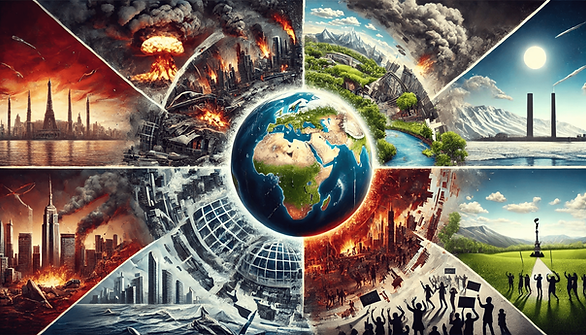
Throughout history, many countries faced tensions corresponding to oppression, displeasure over rule, and a hindrance towards their human rights. The ongoing issue that has endured over time—as shown throughout the documents—is conflict. Conflict can be depicted through religious disputes, social hierarchies, colonization, and overall suffrage. Conflict is still prevalent today where major political authorities extend their control in an attempt to gain more land. This can be shown in modern day Russia when the Russians went to war with Ukraine in an attempt to take over the land of Crimea. The historical documents have shown that conflict has been a major issue during the times of religious disputes, imperialism, government revolts, and enslavement and discrimination.
During the 18th century, an ongoing issue of oppression and inequality threatened the civil liberties of black slaves. The letters from the slaves of Martinique (Document 1) showcase how the black slaves strived for emancipation, and reclaimed the liberty they've gained through centuries of suffering and humiliating servitude. This shows how the black servants had an overall goal to be free from the intense and constricting labor imposed on them by the French colonizers. The restriction of the slaves' civil liberties and their constant suffrage connects to the underlying issue of conflict, as conflict increases tension on their desire for independence. Document 1 also mentions, "we end our reflections by declaring to you that the entire nation of black slaves united together has a single desire for independence." This indicates how the black slaves were striving for their independence.
Similarly to how the third estate wanted to break away from the harsh living conditions and standards imposed by the first and second estate under the leadership of Maximilien Robespierre, the 3rd estate were able to revolt and execute many people all because of the oppression established by the higher classes. This revolution (French Revolution) got so out of hand that the third estate ended up beheading Louis XVI, and even executing their own leader Maximilien Robespierre because the people of the third estate thought that he believed he was above all (god-like), which went against the whole purpose of the revolt. Both the slaves of Martinique and the third estate experienced social inequality and class-struggles presented by the higher classes, which caused a backlash necessary for them to regain their rights.
During the 18th century, British colonization in India raised tensions that led to social and class struggles. During the aftermath of WWI, Britain didn't want to free India from colonization even though they promised the Indians their freedom if they fought bravely against the opponents. This led to the rise of Mohandas Gandhi, showcased in document 2, where through non-violent methods of civil disobedience, it allowed for the Indian colonists to break free from British colonial rule. Due to the advancements in technology during the 20th century, Gandhi utilized voice recordings, newspapers, and pictures that sparked global recognition. This method of non-violence allowed for India to regain their freedom because of how bad it made Britain look. For example, during Gandhi's salt march, where Indians went to the Pacific to gather their own salt, they were being oppressed and beaten by the British, ultimately showcasing how the conflict the British imposed harmed other nations, forcing them to acknowledge this and for Britain to step down and give India the freedom they deserve.
During the 20th century, differences in political ideology and the emergence of new rulers with radical ideologies brought about riots and protests throughout Iran (Document 4). From 1953–1979, Mohammad Reza Shah Pahlavi, the ruler of Iran, imposed pro-western ideology and acted as a secularist. Document 4 states, "as the Shah's relationship with the U.S strengthened and his international profile grew, many of his own people grew displeased of his leadership", indicating that people were unhappy with the way he ruled. This was because the Shah was pro-western and had strong ties with the U.S., leading people to worry that the Shah was too invested in the likes of other countries and not his own. Also, because the Shah was a secular ruler, people didn't like that since Iran was a majority Islamic country, and they started to lose their sense of religious values. As a result of the Shah's methods of ruling, he was forced out of power and replaced by a new ruler who quickly gained attraction from the citizens of Iran because of his religious teachings, Ayatollah Ruhollah Khomeini. This shift of leadership stemmed from the outbreak of riots and protests, which directly correlate to the enduring issue of conflict.
Even today, throughout the 21st century, conflict is still prevalent. Superpowers like Russia exert their influence and dominance on neighboring countries such as Ukraine. In 2014, Russia attempted to reclaim their past Soviet territory which is now under Ukrainian rule. The Russians did this in order to prevent Ukraine from being westernized, as they attempted to join NATO, which was a pro-western organization. The Russians believed that if they didn't take control of that land, the Ukrainians would also become pro-western, which was against Russian ideology (as Russia is anti-America and the West, not an ally). In an attempt to take over Ukraine, Russia launched a full-scale invasion in 2022 in an attempt to overthrow the Ukrainian government and sever ties with western alliances. They did this by driving their tanks and trucks into Ukraine, causing bloodshed across the Ukrainian population. Due to the deaths of many Ukrainian civilians and soldiers, it reinstated how conflict adversely affects people and economic stability within a country across various time periods.
Historical trends and modern-day events showcase patterns where religious discrepancies, foreign influence, and government instability continued to raise conflict in society. The need for power, control, and wealth from countries such as France, England, and Russia continue to bring about periods of conflict and turmoil where people experience oppression. France's third estate, Britain's imperial control, and Russia's attempts to regain their territory all contribute to an ongoing period of conflict between the powerful and powerless; until there is a balance of power, civilians and authoritative figures will continue to have disputes and civil unrest.