

From Imperial Exploitation to Global Inequality
June 14, 2026
This essay demonstrates how conflict persistently reemerges across eras, driven by power imbalances that manifest as colonial atrocities, systemic genocides, and modern economic exploitation.
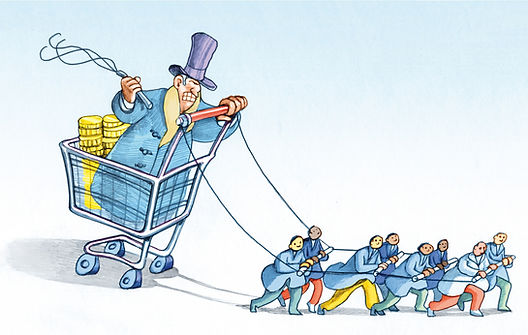
An enduring issue is a challenge or problem that has been discussed over time. Many societies have attempted to address the issue with a varying degree of success. Conflict is an enduring issue that involves the disagreement or argument between individuals, groups of people, and even nations. Conflict can be showcased through oppressive colonial rule, famines, and the aftermaths of industrialization. The enduring issue of conflict can be showcased throughout the documents.
Historically, this systemic violence can be traced back to the beginning of transatlantic exploitation. This issue can be showcased during the horrors of the Middle Passage. This was when Africans were forced onto crowded ships so that they could be sent to South America to work on large plantations. These Africans faced inhumane conditions on these ships and were viewed as dehumanized property. The death rates soared while being on these ships, and this was primarily due to the spread of diseases caused by overcrowding, suicide, and beatings they would receive for trying to revolt. Centuries later, after the Berlin Conference led by Otto von Bismarck, each European country sought to take over almost all of African territory; this was known as the Scramble for Africa. Document 3 showcases the king of Belgium, King Leopold II, as a snake that is wrapped around an African’s body. After the Berlin Conference, Belgium was specifically assigned to take over the Congo due to their abundance of rubber. So, the Belgian colonizers forced the Africans to work and extract rubber in extremely hot weather. The Belgians would threaten the working men to work even harder by dismembering the limbs of their loved ones (wives or children). This directly exemplifies the issue of conflict and its devastating effects on colonized Africans.
While Africa was being partitioned, a different form of economic conflict was undermining societies in Asia. Before Britain's first industrialization, Britain had colonized India under the British East India Company. As a result of Britain's industrialization, Britain was able to dominate cash crops such as textiles, which originally stemmed from India. As a result of this, the demand for textiles in Britain grew, leading to the diminishment of other cash crops in other places. Document 5 states, “But compared to the pitiless operations of the British, the Mughals were models of mercy.” This exemplifies a conflict between India and the Mughal Empire, showcasing how, as a result of high demand for British textiles, other fabrics that were prevalent in the Mughal Empire (muslins) had lost their value.
As the world entered the 20th century, the nature of conflict escalated from economic exploitation to total state-sponsored destruction through famine and genocide. The conflict surrounding genocide can be examined during the Holocaust during World War II. The Holocaust was a genocide that resulted in the death of six million Jews. This was systematically planned by the Germans under Adolf Hitler. Jews were placed in extermination camps where they were executed, or they would be severely underfed and die of starvation. Decades later, a similar horror emerged in Southeast Asia. Document 4 talks about the Khmer Rouge under Pol Pot and the Cambodian genocide. Document 4 mentions, “Between 1975 and 1979, hundreds of thousands of people died from malnutrition, overwork, and mistreated or misdiagnosed diseases.” This depicts how Pol Pot’s systematic regime, known as the Khmer Rouge, led to large-scale starvation and the targeted killing of a quarter of the Cambodian population. Pol Pot would work the intellectuals, religious leaders, or class enemies to death, or he would place them in extermination camps where he would execute them. This regime directly showcases the issue of conflict and how it led to the eradication of entire populations.
This enduring issue has persisted over time and can still be seen in modern-day society. For example, as a result of globalization, many companies now outsource jobs to developing countries in exchange for cheap labor. This causes local workers to struggle as a result of fewer job opportunities, similar to how British factory-made textiles historically damaged Mughal India's muslin industry. Conflict has been an issue that has endured throughout history. As seen in the documents, conflict occurred through imperial control, genocides, and through market competitions that bolstered one economy while hindering another. This issue has continued into modern times through the occurrences of labor disputes and the outsourcing of jobs, which adversely affects people's capital growth. Since conflict continues to affect worldwide society, it remains an important enduring issue today.