

Foreign Influence and the Global Fight for National Autonomy
January 6, 2026
Throughout history, the struggle to resist external power remains a defining global challenge as nations consistently implement radical border policies, revolutions, and protectionist economic strategies to defend their domestic sovereignty and cultural identity from foreign coercion.
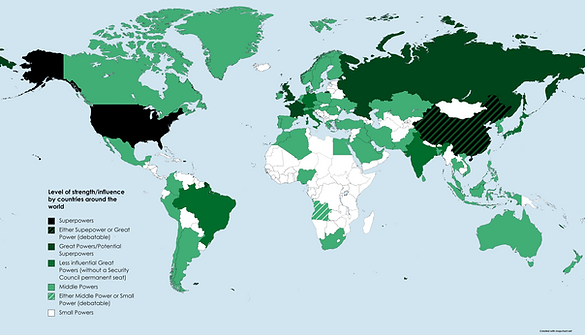
An enduring issue is a challenge or significant issue that people are faced with throughout history. One enduring issue that seems to reoccur throughout history is the issue with the desire for power. Throughout history, countries have fought one another to try to gain influence. Many of these issues arise due to religion, territory, civil disputes, political movements, inequality, etc. One particular enduring issue that seems to persist across the course of time is the struggle over power, particularly controlling external forces that influence domestic affairs. This issue is significant because when decisions are made by foreign nations, their political decisions and changes influence how other countries trade, interact, and work together, affecting both macro and micro economic issues globally.
Document 1, showcases the conflict of power and control in the early 1600s. This document shows how Tokugawa, Japan enforced policies in response to European missionaries. Catholic missionaries from Europe converted approximately 500,000 Japanese to their religion and the Tokugawa Shogunate feared foreign influence. In response, they passed laws banning Christianity; forbidding galeota (a type of ship); and made it unacceptable for priests aboard ships. In 1639 the Tokugawa Shogunate issued an order stating, “entry by the Portuguese galeota is forbidden. If they insist on coming…the ships must be destroyed and anyone aboard…beheaded.” This showed that Japan went to great lengths to protect their sovereignty and cultural practices from foreign influences. The enduring issue presented here shows that due to Japan’s fear that European influence would weaken Japanese loyalty and control, the Shogunate imposed tighter restrictions on its borders to limit foreign exposure, suppressing the Japanese peoples’ rights and freedom.
China was ruled by the Qing Dynasty at the time whose rolling family was from northeastern China called Manchuria. Several Chinese viewed the rulers of the Dynasty has invaders and as a result, their power declined during the mid-1800s due to a series of wars with European countries. Additionally, these losses forced China to sign treaties that not only gave Europeans legal power, but also to control over trading within China. Sun Yat-sen’s Tongmen Hui declared, “When China was occasionally occupied by a foreign race, our ancestors could always in the end drive these foreigners out…Today…we raise the righteous standard of revolt in order to expel an alien race.” he became what was later the first elected president of China. Chinese nationalist show the struggle that they endured from changing positions due to outside influence and control. The enduring issue that the fees was the conflict that they had to subdue to foreign powers while still trying to maintain control of their traditions and culture.
Documents 3A and 3B describe Japanese treatment of Koreans when they gained control of the region from 1910 to 1945. This period was described as Japan’s colonization of Korea, which led to the rise of Juche in North Korea. From 1910 to 1945 Japan imposed their influence on Koreans. Koreans were forced to change their family’s names to more traditional Japanese names and had to worship Japanese gods in an attempt to “erase the Korean nation from the Earth forever.” Juche is an ideology of North Korea that stated that a nation should be self-reliant and as a result, the country became isolated from the rest of the world. In Kim II-sung's speech, it became evident that North Korea sought their independence from Japan and that their oppression led to their desire for self-reliance from outside influences.
This enduring issue connects to other times and places as well. In India, Mohandas Gandhi encouraged Indians to resist British control by boycotting English goods and “make your own cotton cloth by spinning the thread at home.” Today, there is a struggle with the USA and China over tariffs and “free trade” showing how nations try to protect their industries and workers from outside influence. Conflict over power and control has not disappeared but has changed over time. Throughout history, conflict about power has shaped laws, revolutions, and national identities. This was seen through Tokugawa Japan’s exclusion laws, Sun Yat-sen’s policy to expel the Manchus, and Korea’s oppression under Japan and North Korea’s Juche policy. People have struggled to defend their culture. This enduring issue is significant because as long as societies interact, there seems to always be a struggle for power and control.